eSIM vs Physical SIM: Everything You Need to Know
Phones are dropping the SIM tray. Here's how an eSIM works, how it compares to a physical SIM, and what changes for travel, switching carriers and privacy.
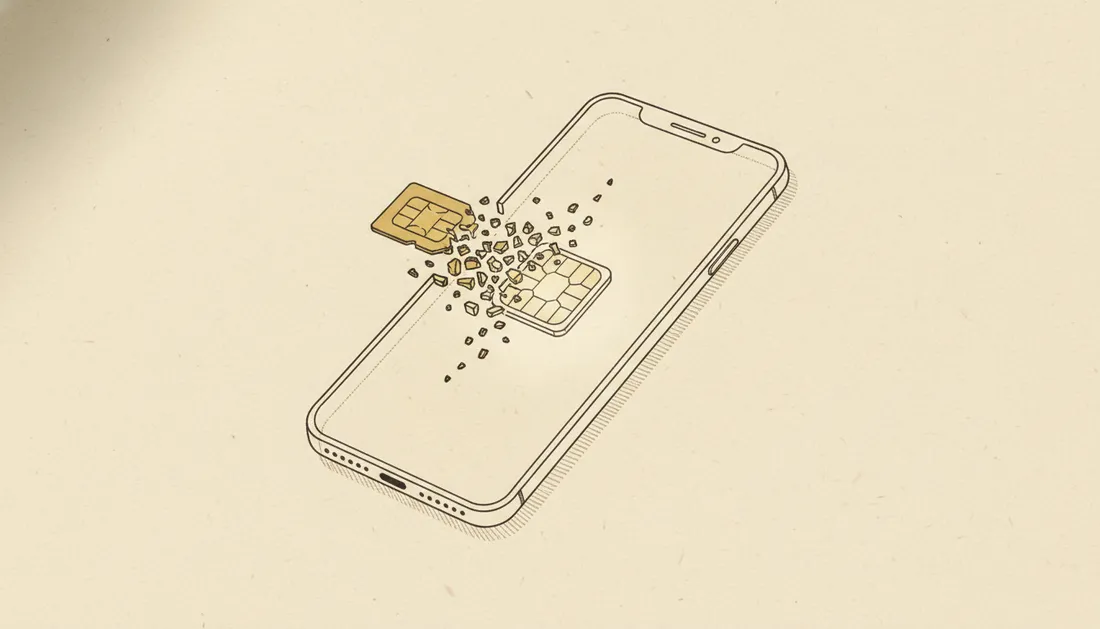
That little tray you poke with a pin to swap SIM cards is disappearing. New phones increasingly use an eSIM — and some have dropped the physical slot entirely. Here's what actually changes for you.
What an eSIM is
A SIM card's whole job is to tell the network who you are. An eSIM ("embedded SIM") does the same thing, but it's a chip built into the phone that you program with a downloaded profile instead of a card you insert. Switching carriers becomes a download, not a trip to a store.

How they compare
| eSIM | Physical SIM | |
|---|---|---|
| Setup | Scan a QR / download | Insert the card |
| Travel | Add a local plan in minutes | Buy and swap a card |
| Switch phones | Re-download profile | Move the card over |
| Lose/damage | Nothing to lose | Card can be lost |
| Multiple numbers | Easy, several profiles | Needs dual-SIM tray |
Where eSIM genuinely wins
- Travel. Land in a new country and activate a local data plan from your hotel in minutes — no hunting for a SIM shop. This alone sells most travellers.
- Dual numbers. Keep work and personal lines on one phone without juggling cards.
- No tiny card to lose or damage, and no tray to let in dust or water.
An eSIM turns "swap the card" into "download the network" — which is brilliant until the moment you want to move it to a borrowed phone fast.
Where physical SIMs still have an edge
Popping a card into a spare or borrowed phone is instant; an eSIM transfer needs the carrier's app or a re-issue. In regions where eSIM support is patchy, or for cheap secondary devices, a physical SIM is simpler. Many phones sensibly support both, giving you the best of each.
The bottom line
If your phone and carrier support eSIM, it's the more convenient choice for most people — especially if you travel. Just remember that "instant swap to another phone" is the one habit you'll have to relearn.
Key takeaways
- An eSIM is a built-in chip you program with a downloaded profile.
- It shines for travel, dual numbers, and having nothing to lose.
- Physical SIMs still win for instant phone-to-phone swaps.
- Many phones support both — a flexible middle ground.
Frequently asked questions
Is an eSIM better than a physical SIM?
For most people, yes — it's more convenient, especially for travel and switching carriers, with nothing to lose or damage. The main downside is that moving to a non-eSIM phone, or swapping phones quickly, is less instant than popping out a card.
Can I have two numbers on one phone with eSIM?
Yes. Most modern phones support dual SIM via one eSIM plus a physical SIM, or multiple eSIM profiles — handy for separating work and personal, or a local travel plan alongside your home number.