What Is an AI Agent? How Autonomous AI Actually Works
An AI agent is software that can plan, use tools and take multi-step actions toward a goal — not just chat. Here's how agents really work, in plain English.
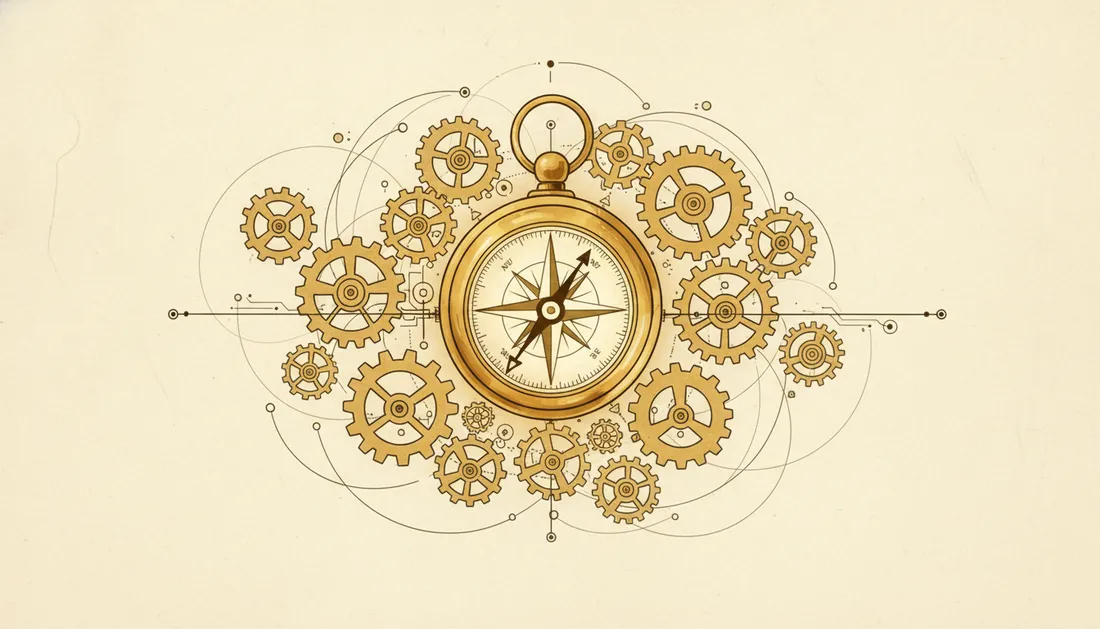
You've heard "AI agent" a hundred times this year, usually right before someone promises it will replace your job. Strip away the marketing and an agent is something specific and surprisingly simple to understand: a language model that's been given a goal, a memory, and a set of tools — and then allowed to decide its own next move.
A normal chatbot is reactive. You type, it replies, the loop ends. An agent is different because it keeps going. It looks at the goal, decides on an action, takes it, looks at what happened, and decides again. That little cycle is the whole trick.
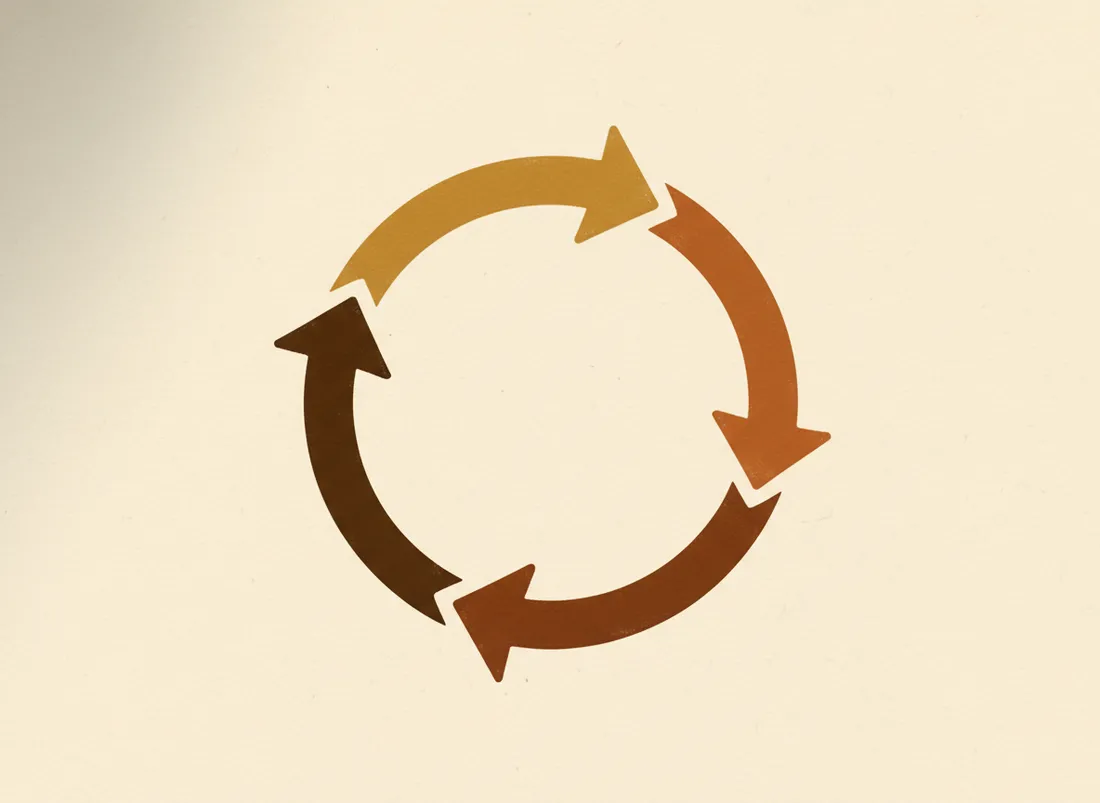
The loop that makes it an "agent"
Almost every agent — from a coding assistant to a research bot — runs the same loop, often called think → act → observe:
- Think. The model reasons about the goal and what to do next.
- Act. It calls a tool: search the web, run code, query a database, send an email.
- Observe. It reads the result of that action.
- Repeat until the goal is done — or a stop condition is hit.
That's it. The "intelligence" is the model deciding which action to take; the "agency" is being allowed to act without asking permission at every step.
Tools are what make it useful
A model alone can only produce text. Tools are how it touches the real world. Give it a web-search tool and it can look things up. Give it a code-execution tool and it can calculate or build. Give it your calendar API and it can book meetings.
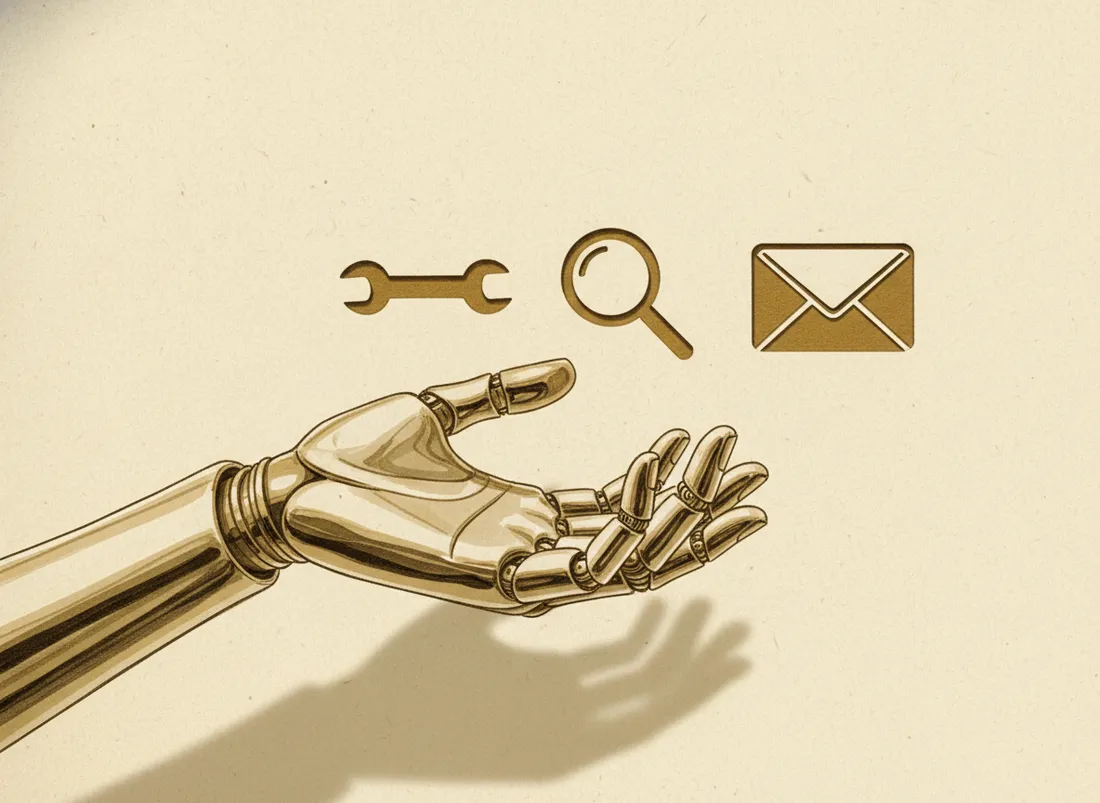
This is why agents feel more powerful than chat: they don't just describe what to do, they do it. It's also why they're riskier — an agent with the ability to send emails or spend money can make real mistakes. Good agent design always pairs new tools with new guardrails.
An agent is only as trustworthy as the smallest action it can take without you watching.
Memory: short-term and long-term
To work across many steps, an agent needs to remember. Short-term memory is the running context of the current task — what it's tried, what worked. Long-term memory is information stored outside the model (often via retrieval-augmented generation) so it can recall facts across sessions without stuffing everything into one prompt.
Where agents shine — and where they fall over
Agents are genuinely good at bounded, tool-rich tasks: triaging support tickets, running test suites, gathering and summarising research, automating repetitive computer work. The clearer the goal and the better the tools, the better they perform.
They struggle with long, open-ended goals. Small errors compound over many steps, they can get stuck in loops, and they'll state wrong conclusions with total confidence. The fix is almost always the same: smaller scope, better tools, and a human checkpoint before anything irreversible.
Key takeaways
- An agent = model + goal + memory + tools, running a think-act-observe loop.
- Tools are what let it act; guardrails should grow with every tool you add.
- Great for narrow, well-defined tasks; unreliable on long open-ended ones.
- In 2026, treat agents as fast interns that still need review.
If you want to go a level deeper, the models doing this reasoning are getting smaller and faster — see our piece on why small language models are eating the world and how on-device AI changes the privacy maths.
Frequently asked questions
Is an AI agent the same as a chatbot?
No. A chatbot answers one message at a time. An agent is given a goal and then loops on its own — choosing actions, calling tools, checking results — until the goal is met or it gives up. A chatbot can be one component inside an agent.
Do AI agents actually work reliably yet?
For narrow, well-defined tasks with good tools and guardrails, yes. For open-ended, long-horizon goals they still drift, loop, or make confident mistakes. Treat 2026 agents as capable interns that need review, not unattended employees.
What is the difference between an agent and a workflow?
A workflow follows steps you wrote in advance. An agent decides the steps at runtime. Workflows are predictable; agents are flexible. Many real systems are hybrids — fixed workflow with an agent making the fuzzy decisions.