Small Language Models Are Quietly Eating the World
The AI story isn't only about giant models. Small, efficient language models are faster, cheaper and private — and they're winning real use cases. Here's why.
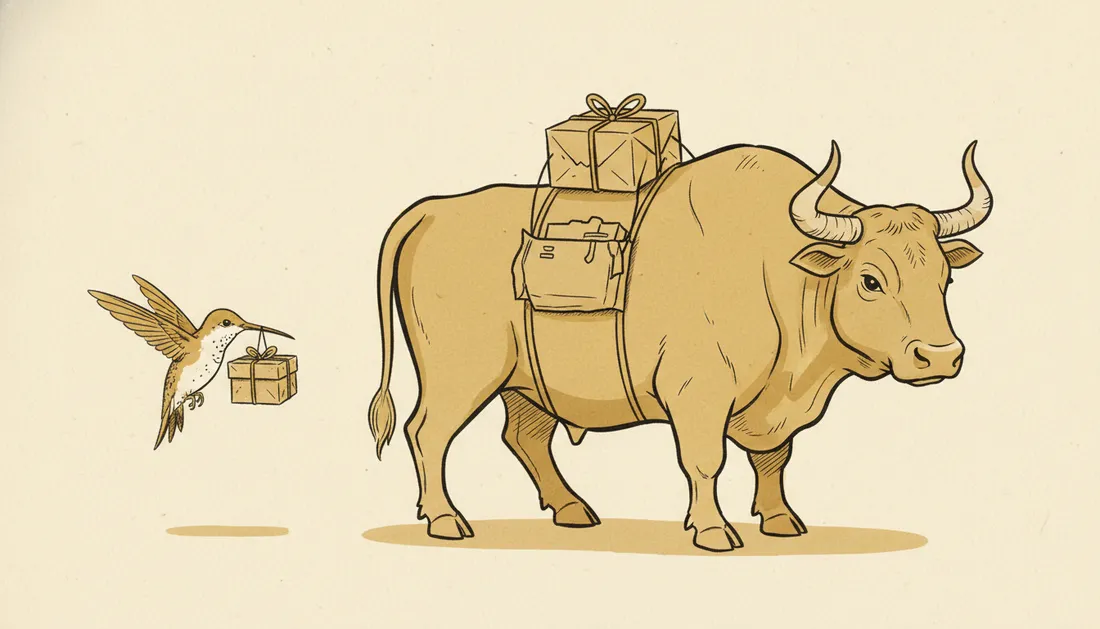
The headlines chase the biggest models, but the most interesting shift in AI is going the other way. Small language models — efficient enough to run on a laptop or even a phone — are getting startlingly capable, and they're quietly taking over the tasks that actually make up most real usage.

Why small is winning
- Speed. A small model replies instantly. For autocomplete, search and chat, latency is the feature.
- Cost. Running a giant model for a simple task is like couriering a postcard by private jet. Small models slash operating cost.
- Privacy. Small enough to run on your device, so data never leaves it.
- Reach. They run on phones, laptops and cheap servers — bringing AI to billions of devices and offline situations.
How they got so good
The trick is distillation: a large "teacher" model trains a small "student" to imitate it, compressing much of the capability into a fraction of the size. Combine that with better training data and clever architectures, and a 2026 small model often beats a 2023 large one.
The future of AI isn't one giant brain in a data centre — it's millions of small, fast ones close to you.
The right tool for the task
This doesn't kill big models. The emerging pattern is routing: a small model handles the easy 90% of requests instantly and cheaply, and only escalates the genuinely hard ones to a large model. You get speed and savings most of the time, and heavyweight reasoning when it's actually needed — a pattern that pairs naturally with agent design.
Key takeaways
- Small models (≈1B–8B) now handle most everyday AI tasks well.
- They win on speed, cost, privacy and device reach.
- Distillation compresses big-model skill into small packages.
- Smart systems route easy tasks to small models, hard ones to large.
Want to try one yourself? Our guide to running an LLM locally uses exactly these models.
Frequently asked questions
What counts as a "small" language model?
Loosely, models with a few billion parameters or fewer (say 1B–8B), small enough to run on a laptop or phone. "Large" models run into the hundreds of billions and need data-centre hardware.
Why not just always use the biggest model?
Cost, speed, privacy and reach. Small models answer instantly, run offline on your device, cost a fraction to operate, and keep data local. For most everyday tasks the quality is already plenty.