Retrieval-Augmented Generation (RAG), Explained Simply
RAG lets an AI answer from your documents instead of guessing. Here's how retrieval-augmented generation works, why it reduces hallucinations, and where it fails.

Language models have a famous weakness: they confidently make things up. They also don't know anything that happened after training, and they certainly don't know what's in your private documents. Retrieval-augmented generation — RAG — is the most common fix, and the idea is refreshingly simple.
Instead of asking the model to answer from memory, you first look up relevant text and hand it to the model along with the question. The model answers using what it was just given. It's the difference between a closed-book and an open-book exam.
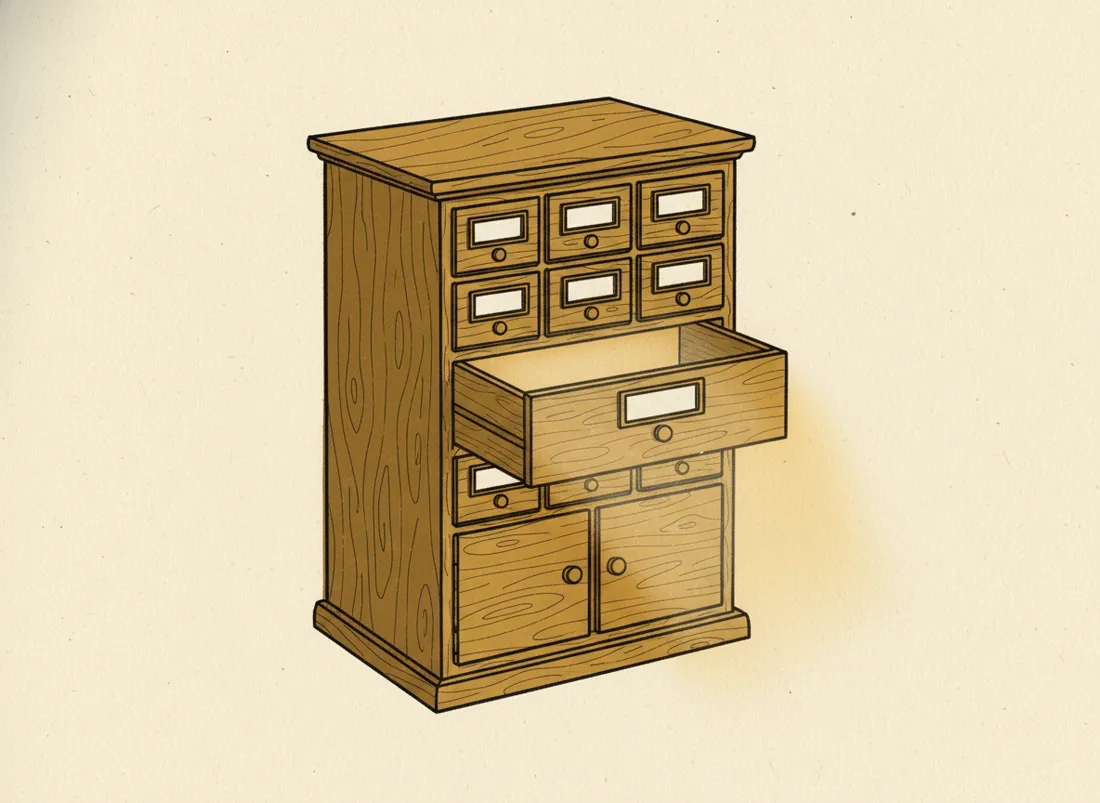
How RAG works in three steps
- Index. Your documents are chopped into chunks and converted into embeddings — lists of numbers that capture meaning. These go into a vector database.
- Retrieve. When a question comes in, it's also embedded, and the database finds the chunks whose meaning is closest. This is search by meaning, not keywords.
- Generate. The top chunks are pasted into the prompt: "Using the following, answer the question." The model responds, grounded in real text.
Why it matters
RAG is how chatbots answer from a company's help docs, how "chat with your PDF" works, and how agents get long-term memory. It keeps answers current (update the documents, not the model), private (your data stays in your database), and citable — a good RAG system can show you the source passage.
RAG turns "trust me" into "here's where I read it."
Where RAG goes wrong
The model is only as good as what retrieval finds. Common failure modes:
- Bad chunking. If documents are split mid-thought, the right answer gets cut in half.
- Wrong retrieval. The database returns plausible-but-irrelevant text, and the model dutifully uses it.
- Ignored context. The model sometimes answers from memory anyway. Asking it to cite the passage keeps it honest.
Key takeaways
- RAG = look up relevant text, then let the model answer from it.
- It works by embeddings: search by meaning, not keywords.
- Benefits: current, private, and citable answers.
- It reduces hallucination but doesn't end it — quality depends on retrieval.
Frequently asked questions
Does RAG stop AI from hallucinating?
It reduces hallucination by grounding answers in real retrieved text, but it doesn't eliminate it. If retrieval pulls the wrong passage, or the model ignores it, you can still get a confident wrong answer. Good citations help you catch this.
Is RAG better than fine-tuning?
They solve different problems. RAG adds knowledge the model can look up; fine-tuning changes how the model behaves or writes. For "answer from my documents," RAG is usually cheaper and easier to keep current.