Quantum Computing in Plain English (No Physics Degree Needed)
Quantum computers aren't just faster PCs. Here's what a qubit really is, why superposition matters, and what these machines will (and won't) actually do.
Quantum computing gets described as either magic or hype, usually by people skipping the one idea that makes it click. You don't need physics — just a couple of mental pictures. Here they are.
The qubit: not a 0 or a 1, but both-ish
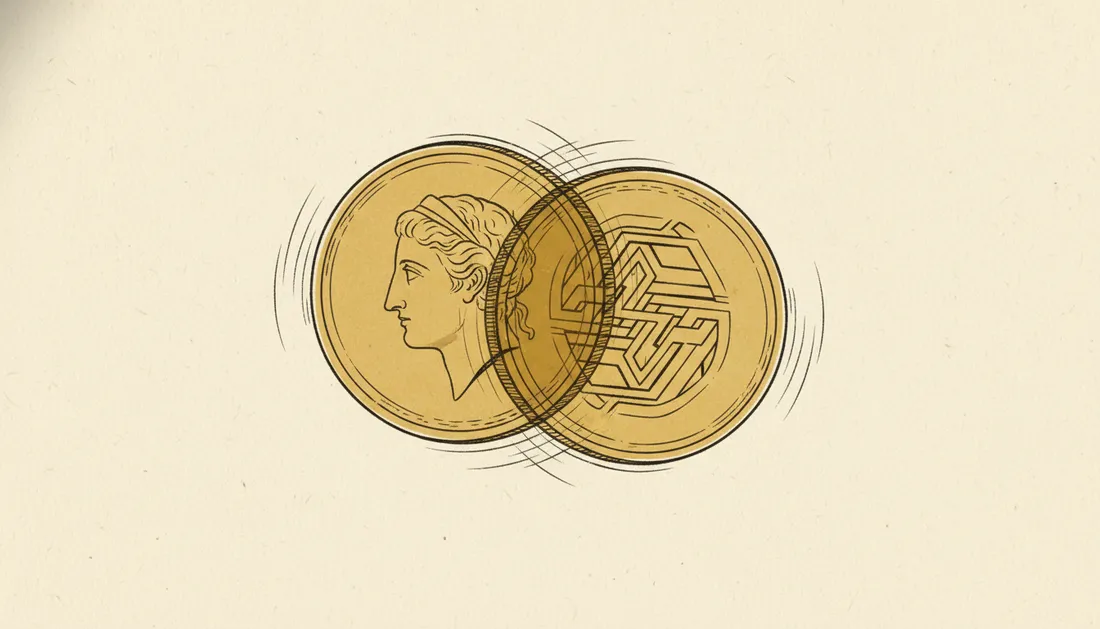
A normal computer stores information in bits, each a 0 or a 1. A quantum computer uses qubits, which thanks to a property called superposition can be a blend of 0 and 1 at once — like a spinning coin that's neither heads nor tails until it lands. Measure it and it picks one; until then, it holds both possibilities.
Why that's powerful
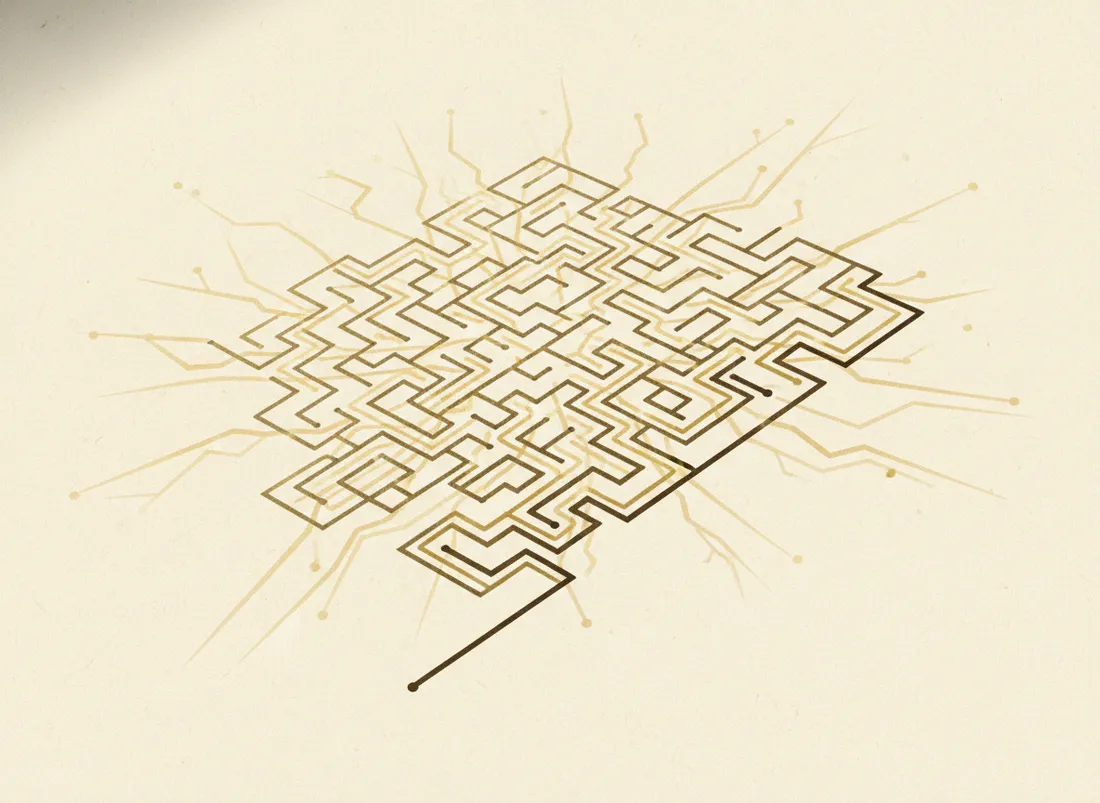
With many qubits in superposition, a quantum computer can represent and explore an enormous number of possibilities simultaneously, rather than checking them one by one. Add entanglement — where qubits become linked so the state of one instantly relates to another — and you can run computations that classical machines would take impossibly long to finish.
A classical computer walks the maze one path at a time; a quantum computer explores many paths at once and lets the wrong ones cancel out.
The catch (why you don't have one)
Qubits are extraordinarily fragile. The tiniest heat or vibration causes decoherence — they lose their quantum state and the answer collapses into noise. That's why real quantum computers are chilled to near absolute zero and need heavy error correction. We're in the early, delicate era.
What they'll actually be good for
Not browsing or spreadsheets — quantum computers are specialists, not replacements. Their promise is in:
- Chemistry and materials: simulating molecules to design drugs, batteries, fertilisers.
- Optimisation: routing, scheduling, logistics with vast option spaces.
- Cryptography: both threatening some current encryption and enabling new kinds.
Should you care now?
As a user, not urgently — your laptop stays classical for life. The one ripple worth knowing: encryption is already shifting to "post-quantum" algorithms so that future quantum machines can't break today's secrets. That's being handled quietly in the infrastructure, much like the security upgrades behind passkeys.
Key takeaways
- Qubits use superposition to hold 0 and 1 at once until measured.
- Superposition + entanglement let them explore many possibilities together.
- They're fragile (decoherence) and need extreme cooling — still early.
- Specialists for chemistry, optimisation and cryptography, not everyday PCs.
Frequently asked questions
Will quantum computers replace my laptop?
No. They're specialised machines for specific problems (chemistry, optimisation, cryptography), not general-purpose computers. Your laptop will stay a classical machine; quantum computers will live in labs and the cloud.
Should I worry about quantum breaking encryption?
Eventually relevant, not imminent for individuals. Large enough quantum computers could break some current encryption, which is why 'post-quantum' algorithms are already being rolled out. It's being handled at the infrastructure level.